Strategic Visual Identity: Leveraging Human Head, Tube and Leaves, Vector for Brand Clarity
In the crowded landscape of digital marketing and brand development, visual assets are not merely decorative; they are functional tools that communicate values, streamline operations, and enhance user experience. The Human Head, Tube and Leaves, Vector represents a specific intersection of organic and structural design elements that can serve as a powerful foundation for diverse creative projects. When approached with strategic intent, this single vector artwork offers more than aesthetic appeal—it provides a versatile framework for storytelling across multiple mediums.
Understanding how to deploy such assets requires moving beyond simple decoration. It involves recognizing the symbolic weight of combining human cognition (the head), connectivity or flow (the tube), and growth or nature (the leaves). This triad creates a narrative of sustainable innovation, biological integration, or holistic health, depending on the context. For entrepreneurs, marketers, and designers, the decision to utilize this specific graphic should be rooted in clear communication goals rather than random selection.
Defining the Asset and Its Strategic Utility
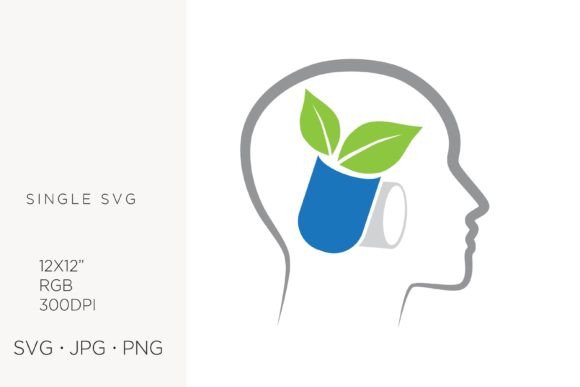
The Human Head, Tube and Leaves, Vector is a high-resolution digital graphic provided in a 12x12 inch artboard at 300 DPI, ensuring crisp reproduction in both print and digital formats. The package includes an SVG file for scalable web use, a JPG for standard viewing, and a PNG with a transparent background for seamless layering. This technical versatility is crucial for professionals who need to maintain brand consistency across varying platforms without sacrificing quality.
Strategically, this asset serves as a visual shorthand for complex ideas. The human head symbolizes thought, identity, and consciousness. The tube suggests connection, transmission, or infrastructure. The leaves introduce elements of nature, growth, renewal, and sustainability. When combined, these elements can articulate a brand’s commitment to eco-friendly technology, mental health awareness, organic product lines, or educational growth. By using a pre-designed vector, creators save significant time on initial concepting, allowing them to focus on customization and contextual application.
Applications Across Business and Creative Verticals
The utility of this vector extends far beyond a single use case. Its adaptability makes it suitable for a wide range of industries and applications. Below are strategic ways to integrate this artwork into your operational and creative workflows:
- Logo Design and Branding: For startups in the wellness, tech, or environmental sectors, this graphic can serve as the core icon for a logo. The clean lines of the vector allow for easy simplification, ensuring recognizability at small sizes, such as on social media avatars or business cards.
- Wall Art and Interior Decor: Businesses aiming to cultivate a calming or inspiring atmosphere—such as co-working spaces, clinics, or educational centers—can use high-quality prints of this artwork. The 300 DPI resolution ensures that large-format prints remain sharp, contributing to a professional environment.
- Stationery and Invitations: For event planners and corporate communicators, incorporating this design into invitation cards, announcements, or letterheads adds a touch of sophistication. It signals attention to detail and aligns the event’s theme with concepts of growth and connection.
- Web and Graphic Design: The SVG format is particularly valuable for web designers. It allows for infinite scaling without pixelation, making it ideal for responsive websites. It can be used as a hero image element, a background pattern, or an illustrative component in blog posts discussing sustainability or human-centric design.
- Handmade Crafts and Party Decor: Small business owners selling handmade items can use the PNG file to create custom decals, stickers, or printed fabrics. This expands product lines with minimal additional design cost, leveraging existing assets for new revenue streams.
Decision-Making: When and How to Use This Asset
Before integrating the Human Head, Tube and Leaves, Vector into your project, consider the alignment with your broader strategic objectives. Randomly inserting graphics can dilute brand messaging. Instead, ask yourself what specific message you intend to convey. Are you highlighting the intersection of technology and nature? Are you emphasizing personal growth within a structured system? If the answer is yes, this asset is a strong candidate.
Planning is essential. Determine the primary medium first. If the goal is digital dominance, prioritize the SVG file for its scalability and small file size, which aids in website loading speeds—a critical factor for SEO and user retention. If the goal is physical presence, such as printed paper items or wall art, rely on the 300 DPI JPG or PNG files to ensure color accuracy and detail fidelity. The RGB color palette is optimized for screens, so if printing professionally, ensure your printer can handle RGB-to-CMYK conversion effectively, or adjust colors beforehand to avoid discrepancies.
Furthermore, consider the audience. Adults aged 20–50, including professionals and educators, tend to respond well to clean, modern aesthetics that convey competence and clarity. This vector’s minimalist approach appeals to this demographic by avoiding clutter and focusing on symbolic meaning. It respects the viewer’s intelligence, allowing them to interpret the connection between the human element and the natural world.
Risks of Unintentional Usage
While versatile, relying on generic or poorly contextualized graphics carries risks. Using the Human Head, Tube and Leaves, Vector without a clear narrative can lead to mixed messages. For instance, if a brand focuses heavily on industrial machinery but uses this organic-themed graphic without explanation, customers may feel confused about the company’s core values. Consistency is key. Ensure that the typography, color schemes, and accompanying copy reinforce the visual metaphor presented by the vector.
Another risk is overuse. Because the asset is available in multiple formats, there is a temptation to place it everywhere. However, strategic restraint often yields better results. Use the graphic where it adds value—such as in key branding moments or focal points of design—rather than as filler content. Over-saturation can diminish its impact and make the brand appear lazy or unoriginal.
Maximizing Long-Term Value Through Customization
To truly leverage this asset, treat it as a starting point rather than a final product. The vector format allows for modification. You can adjust colors to match your brand palette, isolate specific elements like the leaves or the head for different applications, or combine it with other graphics to create unique compositions. This level of customization ensures that while you benefit from the efficiency of a pre-made asset, the final output remains distinct and aligned with your unique brand identity.
For educators and publishers, this graphic can be used to illustrate concepts in textbooks, presentations, or online courses. It serves as a visual anchor for discussions on biology, psychology, or environmental science. By providing a clear visual reference, you enhance learning outcomes and engagement. Similarly, bloggers and content creators can use it to break up text, making articles more readable and visually appealing, which reduces bounce rates and increases time on page.
Conclusion: Intentional Design for Better Results
The Human Head, Tube and Leaves, Vector is more than a digital file; it is a strategic tool for communication. By understanding its symbolic components and technical specifications, you can make informed decisions about its application. Whether you are designing a logo, creating wall art, or developing web content, the key lies in intentionality. Align the graphic with your goals, consider your audience, and customize it to fit your brand’s voice. In doing so, you transform a simple visual element into a powerful asset that supports long-term success, enhances customer experience, and strengthens your market positioning. Thoughtful use of such resources distinguishes professional, strategic creators from those who merely decorate, leading to clearer communication and more impactful results.