Integrating Fruit Watercolor Clipart PNG Assets into Professional Creative Workflows
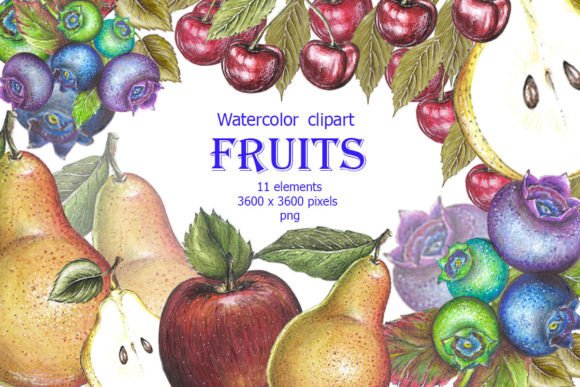
In the landscape of modern digital design, the demand for assets that balance aesthetic warmth with technical precision is higher than ever. Designers, marketers, and content creators frequently seek resources that can bridge the gap between sterile digital layouts and organic, handcrafted appeal. This is where a curated collection of Fruit Watercolor Clipart PNG files becomes an essential component of a versatile creative toolkit. Rather than viewing these images merely as decorative add-ons, professionals integrate them as foundational elements in branding, product design, and digital content strategies. The specific value of high-quality watercolor elements—such as red apples, yellow pears, juicy cherries, blueberries, and green leaves—lies in their ability to humanize a brand or project while maintaining the scalability required for commercial use.
Technical Specifications and Asset Preparation
Before integrating any graphic asset into a workflow, understanding its technical parameters is crucial for ensuring compatibility and quality control. A professional-grade set of watercolor cliparts typically arrives as a bundle of high-resolution files. For instance, a standard premium package includes 11 individual RGB PNG files, each rendered at approximately 3600 x 3600 pixels. At 300 dots per inch (DPI), these dimensions translate to a physical print size of 12x12 inches, which is substantial enough for large-format printing without pixelation.
The choice of PNG format is deliberate. Unlike JPEGs, PNGs support transparency, which is vital for layering. When you download these 11 elements, you are receiving isolated subjects with clean edges. This eliminates the time-consuming process of manual background removal, a step that often introduces artifacts or halos around complex watercolor textures. By starting with pre-isolated assets, designers can immediately drag and drop elements into Adobe Photoshop, Illustrator, Canva, or Procreate, significantly accelerating the initial phases of a project. This efficiency is particularly valuable for freelancers and small business owners who must optimize every hour of their production schedule.
Strategic Application in Branding and Marketing Materials
Watercolor fruit illustrations serve a specific psychological function in marketing: they evoke freshness, natural quality, and artisanal care. When developing brand identities for businesses in the food, wellness, or lifestyle sectors, these assets can be deployed strategically across various touchpoints.
- Logo Design and Brand Marks: A single juicy cherry or a cluster of blueberries can act as a memorable icon for a boutique jam maker, a healthy snack startup, or a natural cosmetics line. The organic irregularity of watercolor strokes contrasts effectively with clean, sans-serif typography, creating a balanced visual hierarchy.
- Social Media Content: For bloggers and social media managers, consistency is key. Using a cohesive set of fruit elements allows for the creation of branded templates. A yellow pear might frame a quote on Instagram, while green leaves provide a subtle border for Pinterest pins. Because the style is consistent across all 11 files, the visual language remains unified even as the content changes.
- Email Newsletters: In email marketing, breaking up text-heavy layouts with soft, colorful imagery increases engagement. A watercolor apple can serve as a bullet point or a section divider, guiding the reader’s eye through promotional offers or educational content without appearing overly corporate.
Enhancing Print-on-Demand and Product Design
One of the most lucrative applications for high-resolution Fruit Watercolor Clipart PNG files is in the realm of print-on-demand (POD) and physical product creation. The 300 DPI resolution ensures that these graphics hold up under scrutiny when printed on tangible surfaces. Entrepreneurs and crafters can leverage these assets to create unique products that stand out in saturated marketplaces like Etsy or Amazon Handmade.
Consider the production of tableware. A pattern created by repeating red apples and green leaves can be applied to ceramic mugs, plates, or napkins. The transparency of the PNG files allows designers to place the fruit directly onto colored backgrounds in their design software, simulating how the final product will look. Similarly, for textile printing, these elements can be arranged into seamless patterns for aprons, tote bags, or kitchen towels. The hand-painted aesthetic appeals to consumers looking for home goods that feel personal and curated rather than mass-produced.
For those involved in paper crafts, such as scrapbooking, card making, or decoupage, these digital assets offer endless versatility. Users can print the elements on high-quality sticker paper or cardstock to create custom embellishments. A set of autumn-themed posters featuring ripe pears and berries can be printed for seasonal home decor or sold as digital downloads for customers to print at home. The ability to scale the images from small postcard sizes to larger poster formats without loss of quality makes this single asset pack a multi-purpose resource.
Workflow Integration and Organization Tips
To maximize the utility of these 11 files, it is helpful to establish a systematic approach to asset management. Simply downloading the zip file is not enough; integrating it into your digital library ensures you can retrieve the right element quickly when inspiration strikes.
- Categorization: Create a dedicated folder in your cloud storage or local drive labeled "Watercolor Fruit Assets." Within this, consider subfolders if you expand your library later, such as "Berries," "Orchard Fruits," or "Foliage."
- Preview Generation: Since PNGs with transparency can sometimes appear as black boxes in certain file explorers, generate a contact sheet or a preview PDF that displays all 11 elements at once. This visual index allows you to quickly identify which fruit or leaf composition fits your current project without opening each file individually.
- Layer Management: When using these clips in composite designs, name your layers clearly. If you are building a complex scene with multiple overlapping leaves and fruits, labeling layers as "Blueberry_Cluster_01" or "Pear_Shadow" prevents confusion during the editing process, especially when collaborating with other designers or returning to a project after a break.
Compatibility with Digital and Physical Mediums
The versatility of RGB PNG files extends beyond static images. These assets are compatible with a wide range of software ecosystems. For web designers, the files can be optimized for faster loading times while retaining clarity on retina displays. They can be used as overlays in video editing software to add a whimsical touch to vlogs or tutorial intros. In educational settings, teachers can incorporate these bright, engaging images into worksheets, presentations, or classroom decorations to make learning materials more appealing to students.
Furthermore, the transition from digital to physical is seamless. Whether you are producing announcements for a wedding, logos for a local farmers' market, or photo overlays for a photography portfolio, the consistent style of the watercolor elements ensures professional results. The key is to respect the native resolution. While you can scale down indefinitely, scaling up beyond the original 3600 pixels may result in softness. Therefore, planning your layout to utilize the assets at or near their native size is a best practice for maintaining crisp edges and vibrant color saturation.
Long-Term Value and Creative Sustainability
Investing in high-quality, versatile clipart sets is a strategy for long-term creative sustainability. Unlike trend-driven graphics that may look dated within a year, watercolor illustrations possess a timeless quality. The organic nature of hand-painted styles resists the fatigue often associated with flat, vector-based trends. By incorporating these 11 elements into your regular workflow, you build a recognizable visual signature. Over time, your audience begins to associate the specific texture and color palette of your watercolor fruits with your brand or personal style.
Moreover, these assets encourage experimentation. Because they are pre-rendered yet flexible, they lower the barrier to entry for complex compositions. A blogger who is not proficient in illustration can still create magazine-quality headers. A small business owner can design professional packaging without hiring an expensive illustrator for every new product launch. This democratization of high-end design tools empowers creators to focus on their core message and strategy, knowing that the visual execution is supported by reliable, high-quality resources.
In conclusion, the integration of Fruit Watercolor Clipart PNG files into your creative process is not just about adding pretty pictures; it is about enhancing efficiency, maintaining brand consistency, and elevating the perceived value of your output. From the initial download of the 11 high-resolution files to their final application on fabric, paper, or screens, these assets serve as a bridge between artistic intent and practical execution. By understanding their technical specifications and exploring their diverse applications, you can unlock new possibilities in your design workflow, ensuring that every project benefits from the charm and professionalism of hand-painted artistry.