Summer Suitcase Illustration: A Practical Guide for Designers and Marketers
Visual communication in the travel and tourism industry relies heavily on immediate recognition. When a viewer sees a specific combination of icons—a suitcase, slippers, a beach umbrella, and a sun symbol—they instantly understand the context: hot summertime vacation. The Summer Suitcase Illustration concept captures this essence through a vector-based approach, utilizing a cartoon flat outline style that is both modern and versatile. For designers, marketers, and content creators, understanding the utility and technical specifications of such assets is crucial for effective deployment across digital and print media.
This article explores what makes this specific illustration style distinct, how it compares to other visual approaches, and when it serves as the optimal choice for your projects. By evaluating the strengths and limitations of vector icon compositions, you can make informed decisions about integrating these elements into your web designs, social media campaigns, or printed materials.
Defining the Summer Suitcase Concept
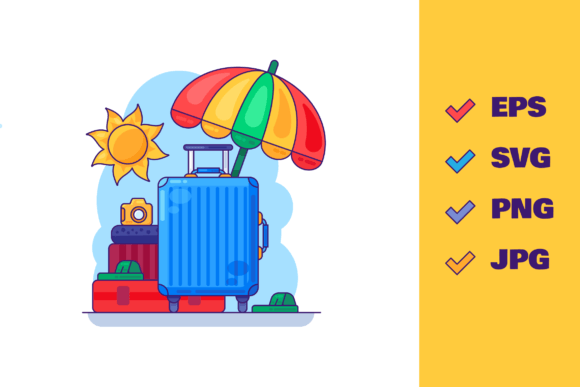
The Summer Suitcase Concept Illustration is not merely a collection of random objects; it is a curated composition designed to evoke the feeling of a tour to a hot country on the coast of the ocean or sea. The core elements typically include a valise or tourist bag, camera, slippers, and a prominent sun symbol. These items are rendered in a cartoon flat outline style, which strikes a balance between playful accessibility and professional clarity.
Unlike photorealistic images that can sometimes feel cluttered or overly specific, this style uses clean lines and simplified shapes. This abstraction allows the viewer to project their own ideal vacation onto the image. Whether used for a blog cover, a website gallery, or a design element in a mobile app, the illustration communicates "time to travel" without the cultural or demographic constraints that photography might impose. The inclusion of transparent background options in formats like PNG and SVG further enhances its usability, allowing seamless integration into various color schemes and layouts.
Vector vs. Raster: Evaluating Format Choices
One of the most significant decision factors when selecting a Summer Suitcase Illustration is the file format. High-quality templates usually provide a suite of files, including EPS, SVG, PNG, and JPG. Understanding the tradeoffs between these formats is essential for maintaining quality across different platforms.
- EPS and SVG Files: These are vector formats. The primary advantage of vector graphics is scalability. You can resize the illustration from a small sticker to a large banner without any loss of quality. SVGs, in particular, are ideal for web use because they are code-based, lightweight, and retain sharpness on high-resolution retina displays. They also allow for CSS styling, meaning you can change the color of the outline or fill dynamically via code.
- PNG Files: Portable Network Graphics offer raster images with transparent backgrounds. This is critical for layering the suitcase and beach elements over complex backgrounds in social media posts or presentation slides. However, unlike vectors, PNGs have a fixed resolution. Enlarging them beyond their original dimensions will result in pixelation.
- JPG Files: Joint Photographic Experts Group files are best suited for situations where transparency is not required and file size needs to be minimized for quick loading. They are suitable for email newsletters or simple blog inserts but lack the flexibility of the other formats.
For professionals working on multi-channel campaigns, having access to all four formats ensures that the asset remains versatile. If you are primarily designing for print, the EPS file is indispensable. For web and app interfaces, the SVG is superior. Recognizing these distinctions helps prevent common workflow bottlenecks where an asset looks perfect on screen but fails in production.
Comparing Illustration Styles: Flat Outline vs. Alternatives
When choosing visual assets for summer-themed content, you are often comparing several stylistic approaches. The cartoon flat outline style of the Summer Suitcase Illustration occupies a specific niche. Here is how it compares to other common styles:
Photorealistic Imagery
Photography offers authenticity and emotional depth through real human expressions and detailed environments. However, it can be expensive to license, difficult to customize, and may not match your brand’s color palette. Stock photos of beaches can also feel generic or cliché. In contrast, the vector illustration provides a clean, branded look that is easier to manipulate and often feels more contemporary and less "stock-like."
3D Renderings
3D illustrations have gained popularity for their tactile, engaging appearance. They work well for tech-focused travel apps or gamified experiences. However, 3D assets are often heavier in file size, requiring more bandwidth to load, and can be visually overwhelming if not used sparingly. The flat outline style is lighter, faster to load, and offers better readability at smaller sizes, making it more suitable for icons, buttons, and informational graphics.
Hand-Drawn Sketches
Hand-drawn styles convey warmth and artisanal charm. They are excellent for boutique hotels or eco-tourism brands emphasizing personal touch. Yet, they can sometimes lack the precision needed for corporate communications or clear instructional design. The flat outline style offers a middle ground: it is friendly and approachable like a sketch but maintains the geometric precision and consistency required for professional branding.
Best-Fit Use Cases and Applications
The versatility of the Summertime holidays image makes it suitable for a wide array of applications. Identifying the right context ensures maximum impact.
- Social Media Stories and Posts: The bright, recognizable symbols (sun, camera, umbrella) perform well on platforms like Instagram and TikTok. The transparent PNG allows designers to overlay these elements on video backgrounds or user-generated content, creating engaging, branded templates.
- Web Banners and Headers: For travel agencies or booking platforms, the horizontal composition of the suitcase and accessories fits naturally into website headers. The vector nature ensures crisp display on all devices, from mobile phones to desktop monitors.
- Print Materials: Brochures, posters, and flyers benefit from the EPS file’s infinite scalability. The clean lines reproduce well in offset printing, avoiding the muddiness that can occur with low-resolution raster images.
- UI/UX Design Elements: The individual components—such as the camera or slippers—can be separated and used as icons within an app interface. This consistency helps users navigate travel-related features intuitively.
Limitations and Considerations
While the Summer Suitcase Illustration is a powerful tool, it is not a universal solution. Designers must recognize its limitations. First, the cartoon style may not align with luxury or high-end travel brands that rely on sophistication and exclusivity. In such cases, minimalist photography or elegant typography might be more appropriate. Second, because the style is popular, there is a risk of visual saturation. To stand out, consider customizing the color palette or combining the vector elements with unique typography or texture overlays.
Additionally, while the template includes premium vector icon composition, it does not include preview images or mockup elements. Users must have the design skills to contextualize the assets effectively. If you lack design resources, you may need to invest in additional tools or services to create compelling mockups for client presentations.
Making the Right Choice
Choosing the right visual asset involves balancing aesthetic preference with technical requirements. If your goal is to create a friendly, accessible, and versatile visual identity for a summer campaign, the Summer Suitcase Illustration is an excellent candidate. Its vector foundation ensures longevity and adaptability, while the flat outline style keeps the message clear and engaging.
However, if your project demands hyper-realism, deep emotional storytelling through human faces, or a luxurious, understated aesthetic, you may need to explore alternative resources. Always consider your target audience, the platforms where the content will live, and your technical capacity to edit and implement the files. By evaluating these factors, you can leverage the Summer Suitcase Concept Illustration to enhance your communication strategy effectively, ensuring that your message of "time to travel" resonates clearly and professionally.